
New Must Read and Buy Author
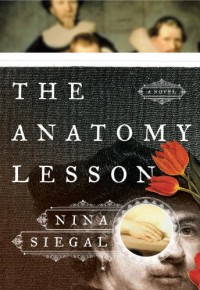
Disclaimer: Arc via Netgalley
Rembrandt van Rijn. There is something about his work, and when everyone thinks of Rembrandt, they think of Amsterdam and the Night Watch. Famous and special. But Rembrandt’s other paintings are great and his house is worth a visit too. For me, Rembrandt’s paintings work because of the quiet and mystery that exists in each one. In some ways that is like Amsterdam, where a twist or turn can lead to someplace unexpected – such as the hidden Catholic church almost in the Red Light District.
The Anatomy Lesson is also a famous Rembrandt paint and has that sense of quiet mystery.
Nina Siegal’s novel is like a Rembrandt painting.
Siegal’s novel is told from several view points, each connected in some way to the painting. There is Dr. Tulp’s wife, Rembrandt, Descartes, Kid Aris, Fetchet, and Flora. In the present day, there is a Pia whose restoration and examination of the painting are used in part as a framing device.
Siegal manages to capture different voices for each of these diverse characters. Flora is radically different in style and tone than Kid Aris. More importantly, there is a quiet power in how these stories are interlinked, how paths cross, and how friendships are lost or created.
The sense of Amsterdam as well as the sense of the characters evolves slowly, in many ways like the crafting of paint. A stoke here, a change in color there. Rembrandt becomes more than just the ambitious artist, Fetchet more than just a collector of oddities, Flora more than a woman in love, and Aris more than a simple body. How these details and back stories are revealed is slight, like the presence of the barking dog or the girl in gold, but the smallest detail is wielded by Siegal like a brush, transporting the slight detail into an item of importance. The book reads like a literary inheritor of Vermeer and Rembrandt.
There are a few series that deal with the story behind a painting. One of these, Every Picture Tells a Story, has a half hour episode about this painting. While the show does an interesting job of talking about the origins of the painting, this book is far more touching and wrenching in how one sees the painting. The painting itself is about using the end of life to aid in the continuation of life, but the book too is about life and what the absence of and ending of life means to those left behind.
 10
10
 3
3


