
Good follow up to Times article
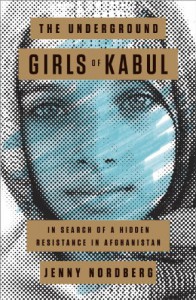
Disclaimer: ARC read via Netgalley. ARC did not have pictures.
I requested this book because I read Nordberg’s original piece for the New York Times.
In certain parts of the world, Afghanistan only being one, there is a strong emphasis put on the importance of sons. A woman’s only duty is to give birth to sons, or mostly sons. Women in these cultures are usually seen as less important, less valuable. However, there is a tradition, as Nordberg discovered, of taking a girl and transforming her into a boy, at least, in some cases, until puberty or it is time for her to marry. This type of girl is called a bacha posh.
Nordberg looks at this tradition in Kabul and in the process raises awareness about how we see gender and how aid neglects certain key or needy individuals; she also somewhat tentatively discusses why such a tradition occurs. It has to do with honor, but also money and protection.
By interviewing and relating the stories of several different underground girls, vary in age and class, Nordberg does paint a boarder picture. It should also be noted that she did change names to protect the identity of the women, girls, and boys. I’m not even sure what gender pronoun to use.
At first, it appears that Nordberg is just going to look at the effect of the gender disguise on young girls – pre-teens and teens, but she ranges further than that. She meets a bacha posh, bacha woman really, who is teaching others. She interviews a former bacha posh who struggles to adapt to married life. She looks at the conflict that such a disguise can cause in the family.
Furthermore, she also links the tradition with famous crossing dress women in other societies – Mulan, Joan of Arc. There is also a wonderful passage about the wedding of Prince William and Kate Middleton that makes you think about how things really aren’t that different after all.
The heart of the book is the women Nordberg describes and their heartbreaking struggle. Will the teenager be forced to be something she doesn’t want? What will happen to the politician? There is also a look at the role of fathers. The more well adjusted bacha poshs have supportive fathers, and the more educated women have supported fathers. Nordberg seems to suggest that the situation of gender and gender roles is something that every member of society should think about. She does not disregard the societal forces that control not only the women but the men as well. The book isn’t so much a feminist tract, but humanist one.
And she has a point. Society likes labels and labels always, eventually, suggest some type of worth. What these women and bacha poshs do is challenge not only traditional definitions of gender, but also love and sexuality. At the very least, the book will have you re-evaluating how your culture sees gender.
Nordberg’s reporting is clear and concise. I do not know if the final proof will have photos, but her skill at description makes them unnecessary. The last scene that she describes is absolutely beautiful.
 9
9


